

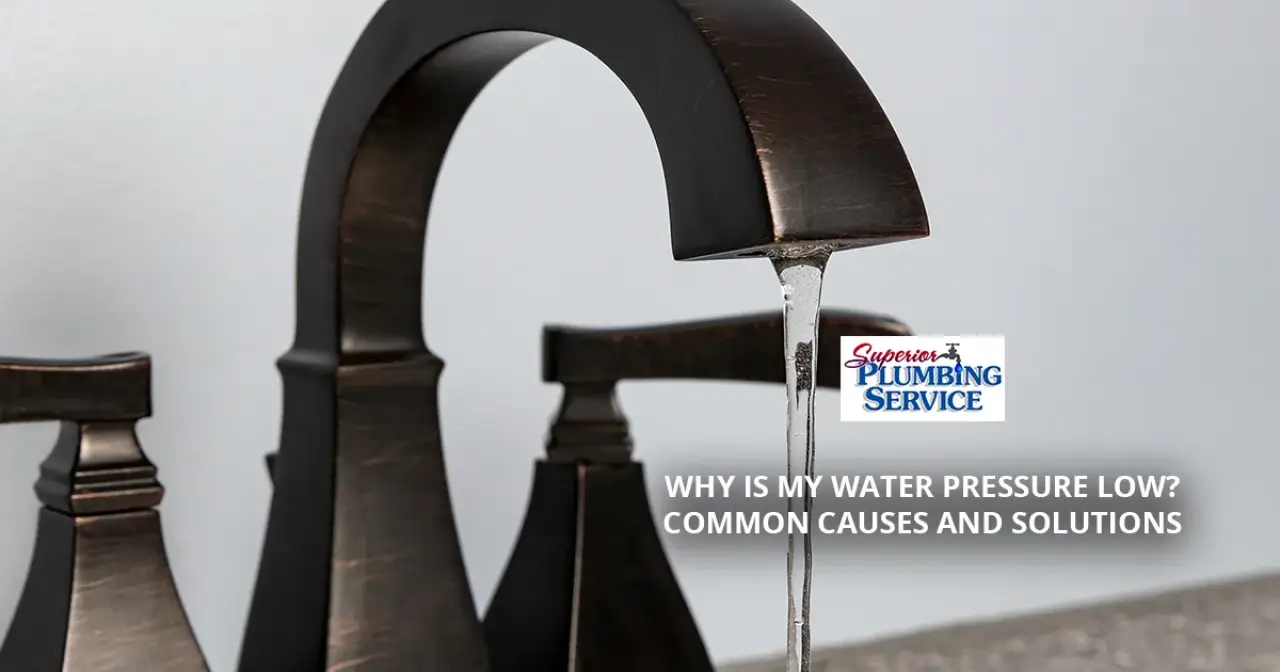
Why Is My Water Pressure Low? Common Causes and Solutions
Low water pressure can turn everyday tasks like taking a shower, washing dishes, or doing laundry into a frustrating experience. If you've noticed low water pressure in your house, there are several possible causes, ranging from a simple clogged fixture to a larger problem with your plumbing system.
7 Causes of Low Water Pressure in a House
Finding the source of the problem is the first step toward getting your water pressure back to normal. Here are some of the most common reasons for low water pressure in a house.
1. Clogged Faucets or Showerheads
If the low water pressure is limited to one faucet or shower, mineral buildup may be blocking the fixture. Sediment and mineral deposits can collect inside aerators and showerheads over time, restricting the amount of water that can pass through.
2. Partially Closed Water Valves
Your home's main shutoff valve or water meter valve needs to be fully open for water to flow properly throughout your plumbing system. If a valve was partially closed during plumbing work or maintenance, you may notice lower water pressure throughout the house.
3. Leaking Pipes
A plumbing leak can reduce the amount of water reaching your faucets, showers, and appliances. Depending on where the leak is located, you may also notice higher water bills, damp areas, water stains, or unexplained moisture around your home.
4. Corroded or Aging Pipes
Older plumbing systems can develop corrosion and mineral buildup inside the pipes. As the opening inside a pipe becomes narrower, less water can flow through it, potentially causing low water pressure throughout your home.
5. Problems With the Pressure Regulator
Some homes have a pressure regulator that controls the pressure of water entering the plumbing system. If the regulator isn't working properly, your water pressure may suddenly become too low or too high throughout the house.
6. Issues With the Municipal Water Supply
Sometimes, the problem isn't inside your home at all. Maintenance, water main problems, or other changes to the local water supply can temporarily affect water pressure, especially if your neighbors are experiencing the same issue.
7. Well Pump or Pressure Tank Problems
If your home uses well water, low pressure could be connected to your well pump, pressure tank, pressure switch, or another part of the system. A professional can inspect the equipment to determine why your system isn't maintaining the water pressure you're used to.
How to Fix Low Water Pressure in a House
The right solution depends on what's causing the problem. If you're trying to improve your home's water pressure, these are a few steps you can take:
-
Clean your faucet aerators and showerheads: If low pressure only affects one or two fixtures, remove and clean the aerator or showerhead to clear away mineral buildup and sediment that may be restricting water flow.
-
Check your water valves: Make sure your home's main shutoff valve and any accessible fixture shutoff valves are fully open. A partially closed valve can limit the amount of water flowing through your plumbing system.
-
Look for signs of plumbing leaks: Check for dripping pipes, damp spots, water stains, unexplained moisture, or an unexpected increase in your water bill. If you suspect a hidden leak, have a plumber inspect your system.
-
Have older pipes inspected: If you have an older home and low pressure throughout the house, corrosion or buildup inside aging pipes could be restricting water flow. A plumber can determine whether sections of your plumbing need to be repaired or replaced.
-
Test your home's water pressure: A plumber can measure your water pressure and check whether a faulty pressure regulator or another plumbing issue is preventing your home from getting adequate pressure.
-
Inspect your well system: If your home uses well water, have the well pump, pressure tank, and pressure switch checked if you're experiencing consistently low or fluctuating water pressure.
-
Call a plumber for sudden or widespread pressure loss: If water pressure suddenly drops throughout your house or you can't identify the cause, schedule a professional inspection. Finding the source early can help prevent a small plumbing problem from turning into a more serious repair.
FAQs About Low Water Pressure
Still wondering why your home's water pressure isn't what it used to be? Here are answers to a few common questions.
Why do I have low water pressure in a house with a well?
Low water pressure in a house with a well can be caused by problems with the well pump, pressure tank, pressure switch, clogged plumbing, or the well's water supply.
Why do I have low water pressure when using two faucets?
If your water pressure drops when using two faucets or fixtures at the same time, your plumbing system may not be supplying enough water to meet the increased demand due to pipe restrictions, supply issues, or pressure system problems.
How can I increase water pressure in my home?
You may be able to increase water pressure in your home by cleaning clogged fixtures or opening partially closed valves, but problems involving leaks, pipes, pressure regulators, or well equipment should be inspected by a plumber.
Get Help With Low Water Pressure in Your Home
Low water pressure can have a simple fix, but it can also point to leaks, aging pipes, well pump problems, or other plumbing issues that need professional attention.
If you're experiencing low water pressure in Canandaigua, Rochester, or the surrounding Finger Lakes region, contact us today to schedule a plumbing inspection or request a quote for your project.