


March 17, 2026
If you've ever had a plumbing emergency, you know how important it is to stop the water fast. That's exactly what a shut-off valve is for. Whether you're dealing with a burst pipe or just doing routine maintenance, knowing your shut-off valves can save you a lot of stress (and a lot of water damage).
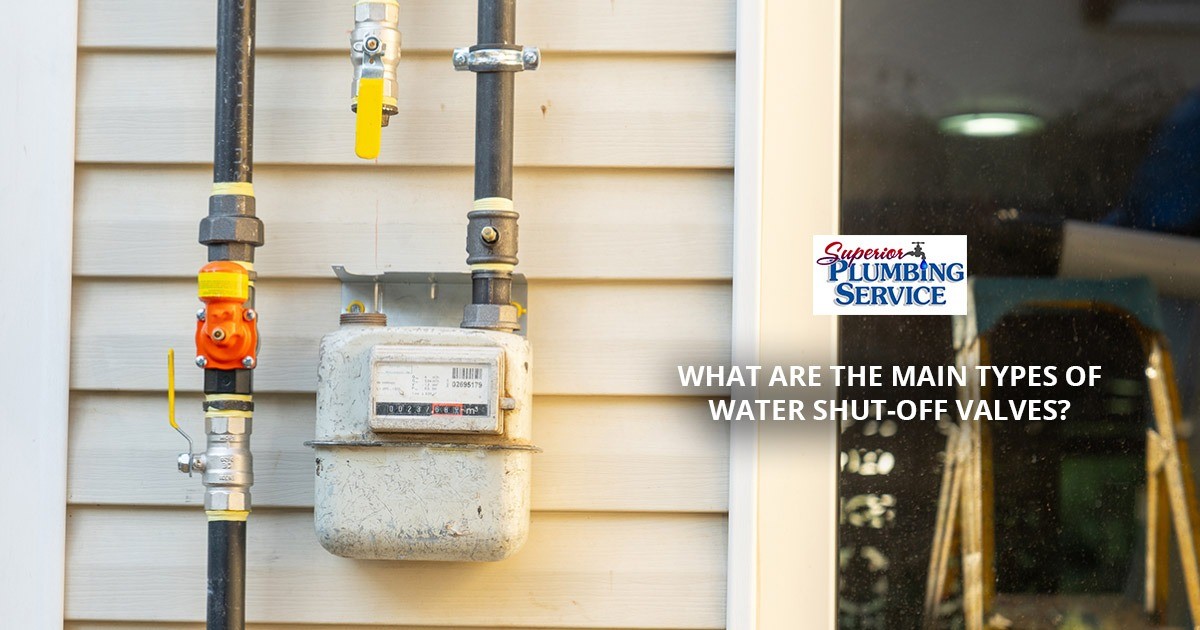
What Is a Water Shut-Off Valve?
A water shut-off valve is a device that controls the flow of water through your plumbing. When it's open, water flows freely. When it's closed, it cuts off the supply. It's that simple.
These valves are usually made of brass, bronze, or plastic, and they come in a variety of shapes and sizes depending on where they're used and what they're controlling. Most of them have either a handle, a knob, or a lever that you turn or rotate to open or close them.
You'll find shut-off valves in several spots around your home. There's typically a main shut-off valve near where the water line enters your house, often in the basement, utility room, or outside near the foundation.
You'll also find individual shut-off valves under sinks, behind toilets, near your water heater, and at other fixtures throughout the home. These let you cut off water to a specific area without shutting off the whole house.
Schedule Plumbing Service Today
7 Types of Water Shut-Off Valves
There are several different types of shut-off valves, and each one works a little differently. Here's a breakdown of the most common ones you'll come across.
1. Ball Valve
Ball valves are one of the most reliable and widely used types. They have a lever handle that rotates 90 degrees to open or close a ball with a hole through the center. When the hole lines up with the pipe, water flows through. When it's turned perpendicular, it's shut off. They're durable, easy to operate, and great for main shut-offs.
2. Gate Valve
Gate valves are an older style that you'll still find in many homes. They work by raising or lowering a metal gate inside the valve using a round wheel handle. You have to turn the handle multiple times to fully open or close it. They're not as quick to operate as ball valves, and they can wear out over time, but they're still common in older plumbing systems.
3. Globe Valve
Globe valves have a rounded body and use a stopper that moves up and down to control water flow. They're good for situations where you want to regulate flow rather than just turn it on or off. You'll often see them on outdoor hose bibs or in older homes.
4. Angle Stop Valve
Angle stop valves (also called angle valves or fixture shut-offs) are the small valves you see under your sinks and behind your toilets. They're designed to shut off water to a single fixture, which makes them really handy for repairs without cutting off water to the whole house. The pipe comes in from the wall and turns at a 90-degree angle, hence the name.
5. Straight Stop Valve
Straight stop valves work the same way as angle stop valves, but the water supply comes straight through rather than at an angle. These are used when the supply line comes up through the floor instead of out of the wall.
6. Pressure Reducing Valve (PRV)
A pressure reducing valve isn't a standard shut-off, but it does control water flow by reducing the water pressure coming into your home from the main line. High water pressure can damage your pipes and appliances over time, so a PRV protects your plumbing system and keeps things running smoothly.
7. Butterfly Valve
Butterfly valves use a rotating disc to control water flow. They're compact, lightweight, and typically used in larger commercial plumbing systems rather than residential ones. If you're managing a commercial property, you may come across these in larger diameter pipes.
Know Your Water Valves & Protect Your Home
Understanding the types of shut-off valves in your home is one of those things that doesn't seem important until it really matters. Knowing where they are and how they work can help you respond quickly in an emergency and make it easier for a plumber to get the job done efficiently.
At Superior Plumbing Service, we're here to make sure your plumbing is in good shape before a small issue turns into a big problem. If you're not sure what kind of valves you have, they're old and haven't been tested in years, or you're dealing with a valve that won't budge, give us a call at 585-905-0100 or schedule your service online today.